
Florida arrest records search gives people fast, free access to real-time booking data from all 67 counties across the state. This public resource shows full-size mugshots, exact arrest times, charge details, and official case documents for both misdemeanor and felony offenses. Users can look up records by name, booking date, or Florida statute code—like 784.03 for battery—and get instant results tied directly to county clerk PDFs. For example, a search might show James Molloy booked in Putnam County on August 10, 2023, at 1:13 am under statute 784.03(1)(a)(1) for first-degree battery. Each entry links to the original arrest report with officer badge numbers, bond amounts, and court dates.
How Florida Arrest Data Works
When someone is arrested in Florida, local law enforcement logs the booking into their county system within hours. These records include the person’s photo, fingerprints, charges, and housing location if they’re held in jail. Most counties feed this data daily into the Florida Department of Law Enforcement (FDLE) database, which powers statewide search tools. The information stays public unless sealed by a judge or exempt under Florida Statute 119. That means anyone can view recent arrests, active warrants, or inmate status without filing a formal request—unless the case involves juveniles or sensitive investigations.
Search by Name, Date, or Statute Code
Florida arrest records search supports three main lookup methods. First, enter a full legal name (last name first) to find matching bookings. Second, use an exact booking date—like October 8, 2023—to see everyone arrested that day. Third, search by Florida statute number, such as 812.014 for drug possession or 316.1935 for DUI. Advanced filters let users narrow results by county, offense type, or arresting agency. For instance, searching “Putnam County + statute 784.03” returns only battery cases from that area. Every result includes a direct link to the county’s official PDF, so users verify details like bail amount or court schedule.
Warrant Checks and Active Alerts
An arrest warrant in Florida starts when police file a sworn affidavit proving probable cause. A judge reviews it, signs the warrant, and assigns a case number. Once entered into FDLE’s system, all agencies across the state see it instantly. Public portals mirror this data, letting citizens check if someone has an active warrant. Searches show the issuing judge’s name, original charge code, and last known address. Some counties, like Sarasota, offer separate warrant lookup tools that update hourly. Always confirm results with the sheriff’s office—online data may lag by minutes or miss sealed cases.
Jail Inmate Lookup by Facility
Florida jail inmate search covers every detention center from Duval County Adult Detention to rural Levy County Jail. Users find current and former inmates using ID numbers, booking codes, or arrest timestamps. Sample data shows Almira Fitz booked in Putnam County on October 8, 2023, at 12:57 pm for battery under statute 784.03(1)(a)(1). Records list housing unit, release date, and upcoming court appearances. Each entry links to the county’s live inmate roster PDF. Smaller jails without online systems—like Baker County (Macclenny) or Bay County (Panama City)—require phone calls with name and birthdate for updates.
County Sheriff Tools and Public Access
Many Florida sheriffs provide free arrest search on their websites. Pasco County requires name, birthdate, booking number, or date—then pressing ENTER pulls live data from their detention center. Lee County offers name or booking number searches but warns the database isn’t a substitute for formal public records requests under Statute 119.044. Sarasota County splits services: one tool for arrest records (name, case number, date) and another for warrants (name only). Both draw from the Electronic Records Management System updated every hour. Always check disclaimers—some sites omit sealed or exempt cases.
Statewide Crime Statistics and Trends
Florida logged 679,221 arrests in 2019, per FDLE’s annual report. Adults made up 634,574 cases; juveniles accounted for 44,647. Top offenses included 787 homicides, 1,234 aggravated assaults, and 5,642 robberies. Burglary arrests rose 12% from 2018 to 2019. Researchers download CSV files breaking down data by county, crime type, and month. This helps track patterns like seasonal spikes in theft or drug-related bookings. Public portals republish these stats but don’t replace official reports—always cite FDLE for accuracy.
Third-Party Directories and Verification
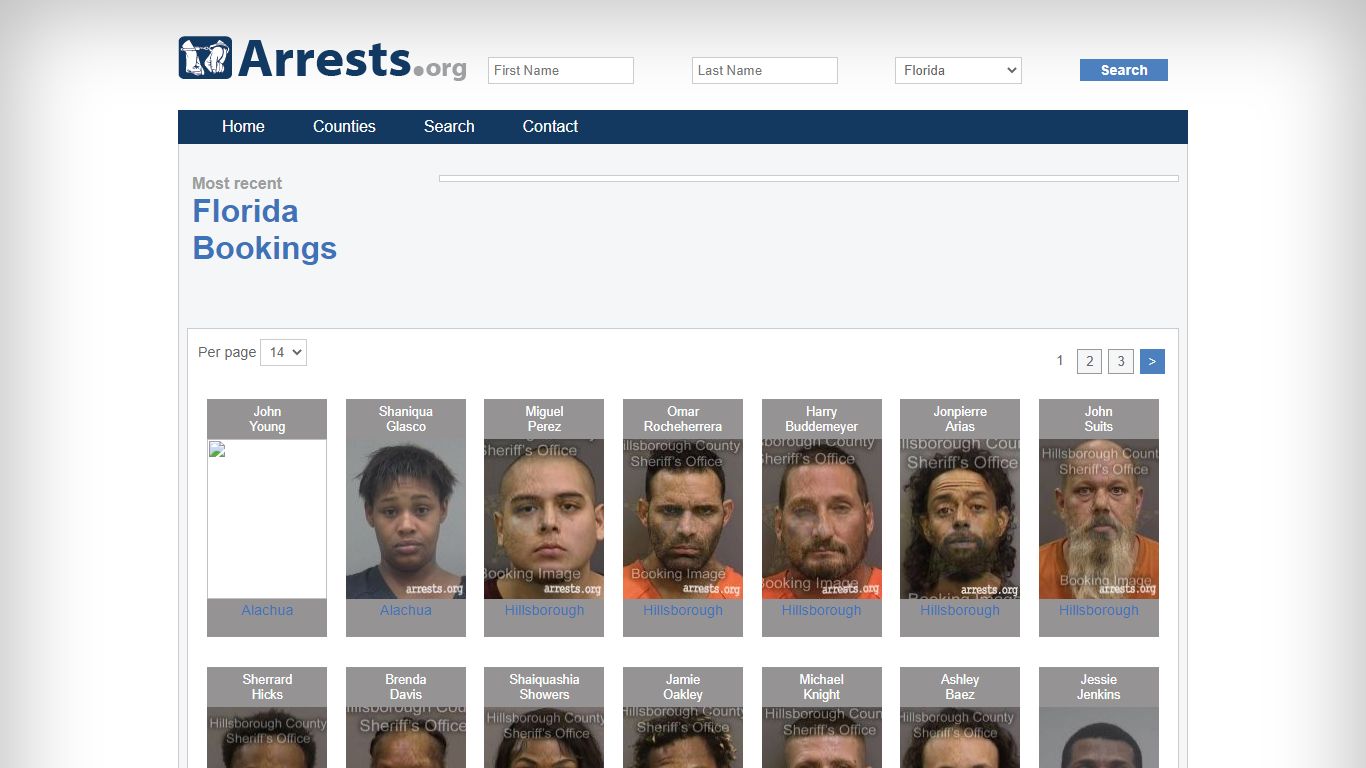
Websites like CountyOffice.org collect links to county arrest logs, mugshot databases, and warrant checkers. They label each source by update speed (real-time vs. daily), PDF access, or fees. Editors verify compliance with Florida Public Records Law and flag paid services charging for basic info. Arrests.org hosts over 150,000 entries from 2015–2024, searchable by location or offense. Milonic’s audit shows florida.arrests.org has low traffic and mixed reputation due to mugshot errors—but still pulls FDLE data refreshed every 24 hours. Always cross-check third-party results with official county sites.
Legal Rights and Record Accuracy
Florida law guarantees public access to arrest records unless restricted by court order. However, mistakes happen—wrong names, outdated charges, or mislabeled mugshots. If you spot an error, contact the county clerk or sheriff’s records division immediately. Provide proof like a case number or court dismissal document. Some sites let users flag inaccuracies online. Remember: arrest doesn’t mean guilt. Charges can be dropped, reduced, or expunged. Always verify current status before making decisions based on search results.
Privacy Concerns and Mugshot Policies
Mugshots appear in Florida arrest records because booking photos are public under Statute 119. But posting them online can harm reputations—even for dismissed cases. Some counties blur faces or remove images after release. Third-party sites often keep mugshots indefinitely unless requested for removal. Florida doesn’t have a statewide mugshot removal law, so policies vary. If your photo appears incorrectly, send a takedown request to the host site and the originating agency. Include your case number and proof of resolution.
How to Use Arrest Data Responsibly
Florida arrest records search helps employers, landlords, or family members stay informed—but use it ethically. Never discriminate based on arrest alone; always confirm conviction status. Check multiple sources to avoid outdated info. For employment or housing, follow FCRA guidelines: notify applicants if you deny opportunities due to records, and let them dispute findings. Schools and volunteer groups should verify charges with courts, not just online databases. When in doubt, consult a lawyer familiar with Florida’s public records laws.
Common Mistakes to Avoid
Don’t assume all Florida counties update arrest data at the same speed. Urban areas like Miami-Dade refresh hourly; rural ones may take days. Never rely solely on third-party sites—always check the official county portal. Avoid searching partial names; use full legal names to reduce false matches. Don’t ignore disclaimers about sealed or exempt records. And never pay for basic arrest info—Florida law says it must be free unless copying costs apply. If a site charges for mugshots or booking details, report it to CountyOffice.org or FDLE.
Mobile Access and User Experience
Most Florida arrest search tools work on phones and tablets. Pasco, Lee, and Sarasota counties offer responsive designs with big buttons and clear fonts. Bookmark official sites for quick access—avoid search engine ads that lead to scam pages. Enable browser autofill for names and dates to speed up queries. Some counties send email alerts for new bookings if you register (opt-in only). Always check URLs: real sheriff sites end in .gov or .org, not .com or .net.
Historical Data and Research Use
Researchers use Florida arrest records to study crime trends, policy impacts, or demographic patterns. StateRecords.org provides downloadable CSVs with yearly totals by county and offense. Arrests.org archives data back to 2015, filterable by year or statute. Universities and nonprofits analyze this for reports—but must cite sources and avoid identifying individuals without consent. Journalists verify facts with court clerks before publishing. Always respect privacy when handling historical arrest data.

Contacting Jails Without Online Systems
Not all Florida jails have web search. Baker County Jail (1 Sheriff’s Office Drive, Macclenny, FL 32063) asks callers to provide full name and birthdate over the phone: (904) 259-3311. Bay County Jail (5700 Star Lane, Panama City, FL 32404) uses a recorded message listing housing units and release dates: (850) 785-5245. These facilities don’t host digital portals, so direct contact is the only way to check inmate status. Have ID ready—they won’t share info without verification.
Official Resources vs. Commercial Sites
Stick to government-run tools for the most accurate Florida arrest records. Sheriff offices, county clerks, and FDLE provide free, real-time data. Commercial sites like mugshot galleries often charge fees, host outdated info, or sell background checks. They may not update dismissed cases, leading to false impressions. If you must use a third party, choose ones verified by CountyOffice.org or linked from official county pages. Never enter payment details unless you’re sure the service is legitimate.
Understanding Charge Codes and Statutes
Every Florida arrest lists a statute code—like 784.03 for battery or 812.014 for theft. These numbers reference the Florida Statutes, which define crimes and penalties. Searching by code helps find similar offenses across counties. For example, statute 316.1935 covers DUI with property damage. Knowing codes speeds up research and avoids confusion from vague charge descriptions. Free statute guides are available on the Florida Legislature’s website or through county clerk offices.
Court Dates and Next Steps After Arrest
Arrest records show scheduled court appearances, but dates change often. Always confirm with the clerk’s office—don’t rely solely on online data. First hearings usually happen within 24–48 hours of booking. If bail is set, the inmate can pay to get out before trial. Missed court dates trigger new warrants. Families should track dockets using case numbers from arrest reports. Public defenders are available for those who can’t afford lawyers—apply at the courthouse on your hearing day.
Expungement and Record Sealing
If charges are dropped or you’re acquitted, you can ask to seal or expunge your Florida arrest record. Sealing hides it from the public; expungement destroys it entirely. Not all cases qualify—felonies, violent crimes, or repeat offenses may be ineligible. File petitions with the court that handled your case. Processing takes weeks or months. Once approved, update third-party sites by sending the order. Note: some employers (like schools or law enforcement) can still see sealed records.
Reporting Errors or Misinformation
Found a mistake in a Florida arrest record? Contact the source immediately. For county sites, email the sheriff’s records division or clerk’s office. For third-party portals, use their “report error” button or support form. Include your name, case number, and proof of correction (like a court dismissal). Florida law requires agencies to fix inaccuracies within a reasonable time. If ignored, file a complaint with FDLE or the Florida Attorney General’s office.
Staying Safe While Searching
Use Florida arrest records search for legitimate purposes only—safety, employment checks, or family concerns. Never stalk, harass, or share personal details of arrestees online. Protect your own privacy: don’t post your search results publicly. Use secure Wi-Fi when accessing sensitive data. If researching someone you know, consider talking to them directly instead of relying on digital records. Remember: everyone deserves fairness and accuracy.
Future of Public Arrest Access
Florida continues expanding digital access to arrest data. More counties are adding real-time APIs, mobile apps, and automated alerts. FDLE plans to integrate facial recognition for faster warrant matches—but faces privacy debates. Expect clearer mugshot policies and easier expungement processes in coming years. Stay informed through official channels: sheriff newsletters, FDLE updates, or county clerk bulletins. Public input shapes these changes—attend town halls or submit comments when new systems launch.
Related Resources for Florida Public Records
- Portage County Public Records Search
- Free White Pages Florida
- Duval Clerk Of Courts Public Records
- Bakersfield Juvenile Hall Inmate Search
Contact Information for Assistance
For help with Florida arrest records search, contact your local sheriff’s office or county clerk. Baker County Jail: 1 Sheriff’s Office Drive, Macclenny, FL 32063 | Phone: (904) 259-3311. Bay County Jail: 5700 Star Lane, Panama City, FL 32404 | Phone: (850) 785-5245. FDLE Public Records: https://www.fdle.state.fl.us. Most offices respond within 1–2 business days. Have your case number or full name ready.
Frequently Asked Questions
People often ask how to find Florida arrest records, whether mugshots are public, and how to correct errors. Below are clear, direct answers based on current Florida law and official practices.
How do I search for someone’s arrest record in Florida?
Go to your county sheriff’s website or use a statewide portal like florida.arrests.org. Enter the person’s full legal name, booking date, or Florida statute code. Results show mugshots, charges, and court dates. Always verify with the county clerk—online data may be delayed. For jails without web search, call directly with the inmate’s name and birthdate.
Are Florida arrest mugshots public record?
Yes, booking photos are public under Florida Statute 119 unless sealed by a judge. Most counties post them online within hours of arrest. However, some remove mugshots after release or case dismissal. Third-party sites often keep them longer—request takedowns if your case was resolved. Never assume guilt from a mugshot; charges can be dropped.
Can I remove my arrest record from public view?
If charges were dropped or you were acquitted, you can petition to seal or expunge your record. File forms with the court that handled your case. Approved requests hide or destroy the record. Note: sealing doesn’t erase it completely—some employers or agencies can still access it. Expungement is stricter but not available for all offenses.
Why do some Florida counties not have online inmate search?
Rural or smaller counties like Baker or Bay lack funding or staff for digital systems. They rely on phone calls or in-person visits for inmate info. This doesn’t mean records are private—they’re still public under Florida law. Call the jail directly with the inmate’s full name and birthdate to get status updates.
How accurate are third-party Florida arrest databases?
Third-party sites vary widely. Some update daily from FDLE feeds; others host outdated or incorrect data. Always cross-check with official county sources. Avoid sites that charge for basic arrest details—Florida law requires free access. Report inaccurate mugshots or charges to the host and the originating agency.
What should I do if I find an error in my arrest record?
Contact the county sheriff’s records division or clerk’s office immediately. Provide your name, case number, and proof of correction (like a court dismissal). Agencies must fix errors within a reasonable time. If ignored, file a complaint with FDLE. For third-party sites, use their error-reporting tool and send a copy of your court order.
Can employers see my sealed Florida arrest record?
It depends. Sealed records are hidden from the public but may be visible to certain employers like schools, law enforcement, or licensing boards. Expunged records are destroyed and generally inaccessible. Always disclose sealed arrests if asked—lying can hurt your application. Consult a lawyer for job-specific advice.